Sales Psychology
The Psychology Behind Emotional Selling
Selling is rarely about logic. It is about feeling. Understanding the emotional drivers behind a decision is what turns a pitch into a conversation someone wants to say yes to.
Read MoreSales Psychology
September 23, 2026 · 6 min read · By Malisa Migues
A customer can understand every feature of a product and still walk away.
You can walk them through every specification, answer every question, and demonstrate every advantage — and at the end of it all, they thank you, promise to think about it, and leave. The logic was sound. The explanation was complete. The sale did not happen.
Why?
Because a purchase is not only an exchange of money for a product. It is a response to trust, certainty, perception, communication, emotion, and the experience of the conversation itself. The features build the case. But something else decides.
Every buying decision has two layers. There is the visible layer — the reasons a customer can list, the comparison of options, the calculation of price against value. And there is the layer beneath it, where the real decision is taking shape: Do I trust this person? Do I feel certain? Does this feel right?
The visible layer is the one most sales conversations are built to address. We prepare for it. We rehearse it. We refine it until every objection has an answer. But the deeper layer is the one that actually moves, and it does not move because of a feature. It moves because of a feeling.
Before customers buy your product, they are deciding whether they believe you.
That decision is rarely spoken aloud. It happens quietly, in the way a customer leans in or pulls back, in the questions they ask, in the silence after you answer. If the trust is not there, no feature can compensate for it. If the trust is there, the features become evidence for a decision the customer is already moving toward.
Trust is the foundation, but certainty is what closes. A customer can trust you and still hesitate — because trust says “I believe you” while certainty says “I am sure this is right for me.”
Certainty is an emotional state, not a logical conclusion. It is the feeling that the risk is acceptable, that the choice is sound, that the person in front of me understands what I actually need. When that feeling is present, the sale moves forward almost on its own. When it is absent, the customer stalls — asking for more information, comparing more options, needing more time.
This is why two salespeople can present the identical product and get completely different results. The product is the same. The certainty they create is not.
Customers rarely remember every feature you explained. They remember how confident — or uncertain — they felt about saying yes.
Value, too, is partly emotional. The same product can feel expensive in one conversation and obvious in another — not because the price changed, but because the perception of value changed.
Perceived value is not a number. It is the customer’s sense that what they are getting is worth more to them than what they are giving. That sense is shaped by how well the offer connects to their real desire — not the desire they name first, but the one underneath it. The relief they are hoping for. The problem they are tired of carrying. The version of themselves they are quietly trying to become.
When a salesperson speaks only to the surface request, value feels thin. When they speak to the desire underneath it, value feels obvious. The price has not moved. The meaning has.
A purchase is, at its heart, an act of hope. The customer is hoping that this product, this service, this decision will change something — a frustration, a limitation, a feeling they no longer want to carry. That hope is desire, and desire is emotional.
This is why emotional connection matters in selling. Not because it is a technique, but because it is the truth of what is happening. People do not experience a sales conversation as a list of features. They experience the person delivering the message — and they decide, in part, based on how that person made them feel.
A customer who feels understood is already moving toward yes. A customer who feels processed will negotiate, hesitate, and often disappear — no matter how perfect the product was on paper.
None of this makes logic unimportant. Logic has a real role: it protects the decision the emotion has already made. After the customer feels ready to say yes, they need reasons — reasons they can repeat to a partner, a boss, or themselves the next morning. The strongest sale gives both: an emotional reason to move forward, and a logical reason to stay moved.
But the order matters. Speak to logic first and you may never reach the emotion. Speak to the emotion honestly, and the logic will often line itself up.
A sales conversation contains far more emotional information than most people realize. Learning to recognize those signals — the trust, the certainty, the desire, the hesitation — can change the way you communicate with customers.
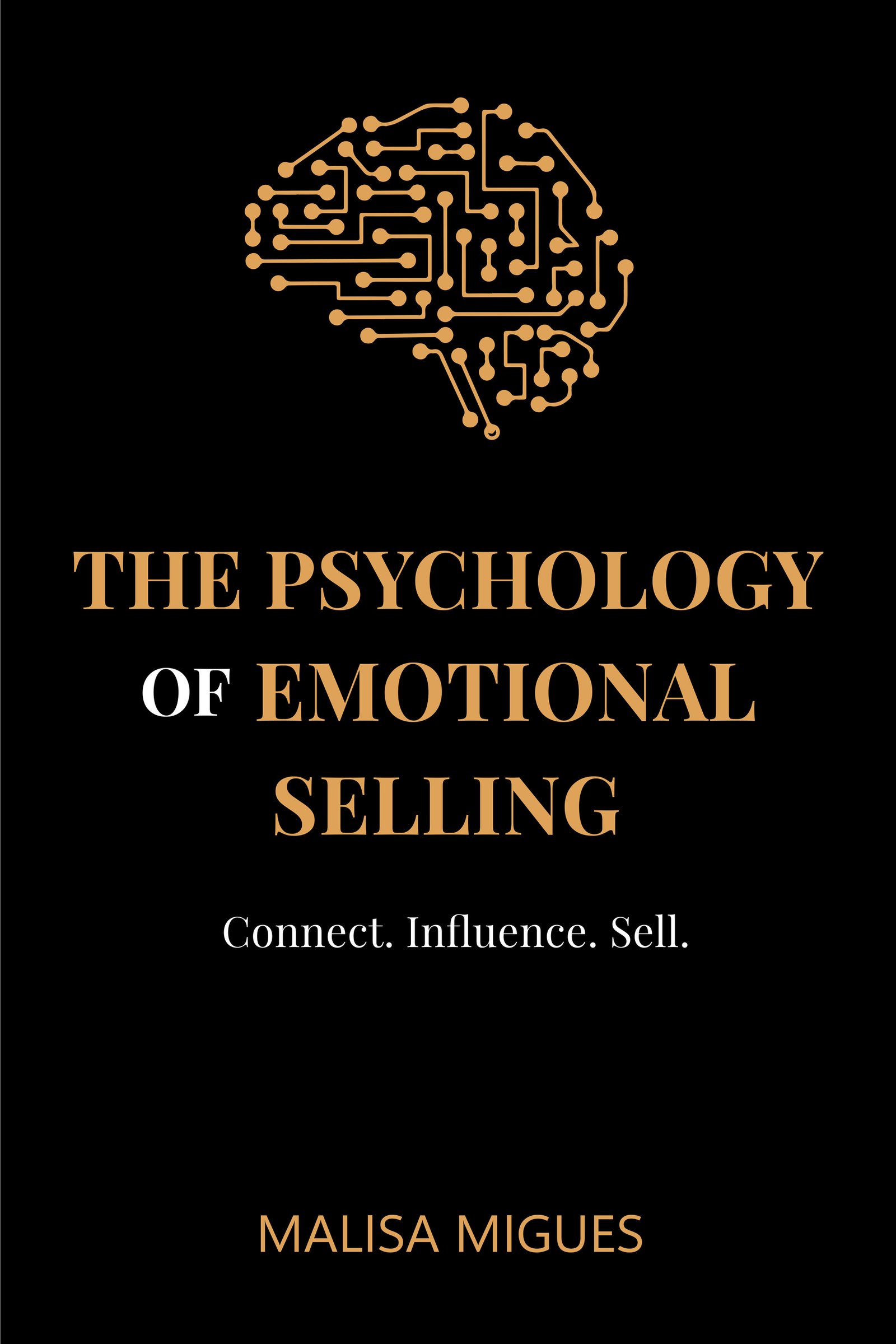
Explore these ideas more deeply in The Psychology of Emotional Selling by Malisa Migues.
Discover more about Malisa Migues and her work at malisamigues.com.
Written by
Malisa Migues
Author · Voice Artist · Communication Professional
Explore more from Malisa Migues
English
Connect. Influence. Sell.
Continue the journey — from the voice that persuades to the words that connect. A book to deepen everything you read here.
Keep Reading
Sales Psychology
Selling is rarely about logic. It is about feeling. Understanding the emotional drivers behind a decision is what turns a pitch into a conversation someone wants to say yes to.
Read MoreSales Psychology
The decision is emotional; the explanation is rational. Understanding this gap is the key to speaking to the part of your customer that actually decides.
Read More