Voice
5 Vocal Habits That Make You Sound More Confident
Confidence is something you can hear. These five practical vocal habits will help you speak with steadiness, presence, and authority — even when you do not feel confident yet.
Read MoreVoice
August 26, 2026 · 5 min read · By Malisa Migues
We can choose every word carefully and still communicate something completely different from what we intended.
Why?
Because people don’t just listen to our words. They listen to our voice.
Our tone, rhythm, pauses, pace, and intention can communicate confidence, uncertainty, warmth, authority, enthusiasm, indifference, or tension—even before the listener has fully processed what we are saying.
Imagine a sentence as simple as:
“It’s good to see you.”
It can sound warm and sincere. It can sound distant. It can feel like a formality. It can even communicate the exact opposite of the words themselves.
The words haven’t changed.
The voice has.
That is why learning to communicate more effectively is not simply about expanding our vocabulary or finding the right words. It also requires understanding how we use our voice.
There is a common misconception that having a good voice means being born with a certain type of vocal tone.
It doesn’t.
An effective voice does not need to be perfect, nor does it need to sound like the voice of a professional broadcaster. It needs to be consistent with the message we want to communicate.
Learning to breathe properly, control our pace, use pauses effectively, and recognize our intention can significantly transform the way others receive our words.
It can also change the way we feel when we speak.
Many people feel they need to fill every second of silence when speaking.
Yet a well-placed pause can have more impact than several words.
A pause gives us time to breathe, organize our thoughts, and allow the listener to absorb what we have said.
Whether we are having a conversation, giving a presentation, negotiating, or selling, speaking faster does not necessarily mean communicating better.
Sometimes, slowing down gives a message greater clarity and authority.
When we listen to someone, our brain is not simply analyzing what that person is saying. We are also looking for signals that help us interpret the message.
Do they sound confident?
Do they sound sincere?
Are they genuinely interested?
Are they listening to me?
Our voice constantly influences these perceptions.
This becomes especially important in situations where trust matters: a professional conversation, a job interview, a presentation, a negotiation, or a sales conversation.
There is a simple exercise that can reveal a great deal about the way you communicate.
Record yourself speaking about any subject for one minute.
Then listen to the recording without focusing too much on the words.
Pay attention only to your voice.
Are you speaking too quickly?
Do you use pauses?
Does your tone vary, or does it remain the same?
If you heard that voice without knowing it was yours, would it sound confident to you?
The purpose is not to judge your voice.
It is to understand it.
Your voice is a tool you use every day, yet most of us rarely stop to notice how we are using it.
Communication begins long before we find the perfect phrase.
It begins with intention.
It continues through the voice.
And finally, it becomes words.
When we learn to listen to our own voice and use it consciously, we are not simply learning to speak better.
We are learning to communicate who we are more effectively.
Malisa Migues
Author · Voice Artist · Communication Professional
Written by
Malisa Migues
Author · Voice Artist · Communication Professional
Explore more from Malisa Migues
English
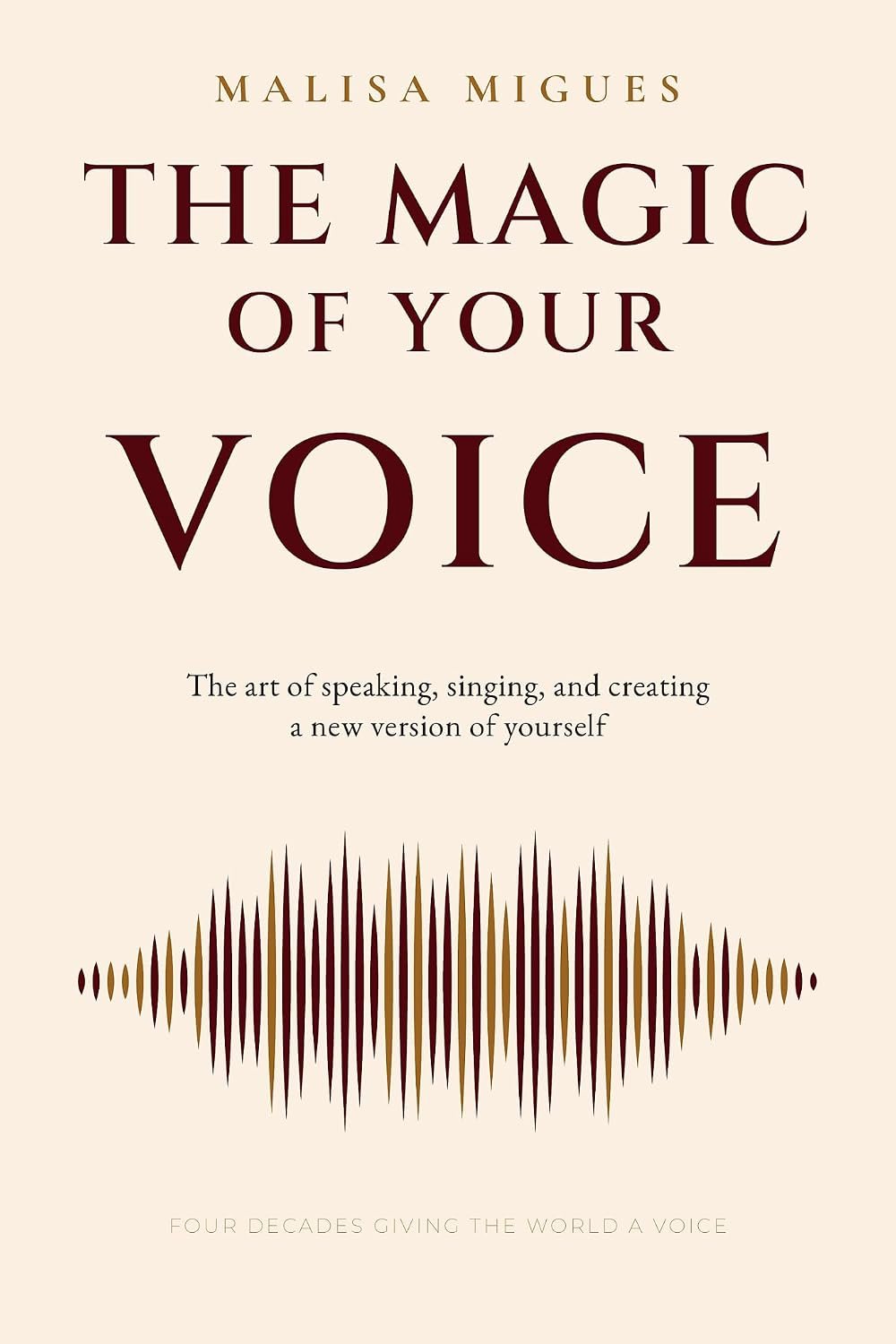
The art of speaking, singing, and creating a new version of yourself
Continue the journey — from the voice that persuades to the words that connect. A book to deepen everything you read here.
Keep Reading
Voice
Confidence is something you can hear. These five practical vocal habits will help you speak with steadiness, presence, and authority — even when you do not feel confident yet.
Read MoreSales Psychology
Selling is rarely about logic. It is about feeling. Understanding the emotional drivers behind a decision is what turns a pitch into a conversation someone wants to say yes to.
Read More