Communication
How to Make Your Voice More Engaging
An engaging voice is not louder — it is more alive. Small changes in melody, pace, and warmth can make people want to keep listening to everything you say.
Read MoreCommunication
November 21, 2026 · 6 min read · By Malisa Migues
Your palms sweat. Your heart races. You feel the words tangling in your throat before they ever reach your mouth. If you have felt this way before speaking in public, in a meeting, in an interview, or in front of a client, I want you to know something: you are not alone, and there is nothing broken about you.
Nerves are not a sign of weakness. They are a sign that something matters to you. The problem is not feeling them, but not knowing what to do with them. That is why I want to teach you how to speak with confidence even when you feel nervous, using simple tools anyone can practice.
I am a voice artist. I have spent years in front of a microphone, and I have felt those nerves too. What I learned is that confidence is not the absence of fear: it is knowing how to manage it. And the good news is that it can be trained.
When you expose yourself to others, your body reacts as if there were real danger: your heart speeds up, your stomach tightens, your mouth goes dry. It is an ancient survival response. Your brain interprets being judged as a threat and prepares you to flee.
But you cannot flee from a presentation. What you can do is teach your body that you are safe. And that is done with breathing, posture, preparation, and mindset. Let us go step by step.
Here are six techniques, each with a simple exercise. You do not need to do them all at once; pick one and practice it this week.
When you get nervous, your breathing becomes short and high, in your chest. That feeds the anxiety. Breathing low, from your abdomen, sends your brain the signal that there is no danger.
Exercise: before you speak, inhale for four seconds feeling your abdomen fill, hold for two seconds, and exhale for six seconds. Repeat three times. You will feel your heart rate slow down.
Your posture changes how you feel. Shrinking makes you feel small; opening up makes you feel secure. Planting your feet, lengthening your spine, and relaxing your shoulders communicates authority, even to yourself.
Exercise: stand tall, feet hip-width apart, shoulders back, chin parallel to the floor. Hold that for a minute before you walk into the room or join the video call.
Nerves speed up your speech. Talking fast signals anxiety and makes you harder to understand. Slowing down brings clarity, authority, and time to think.
Exercise: read a paragraph of this article aloud at half the speed you normally would. Pause at the end of each idea. That is the pace that suits you.
Preparing gives you confidence; memorizing word for word makes you rigid and scares you if you forget something. The best approach is to know your key ideas and let the words flow.
Exercise: write only three main ideas on a card. Practice telling them aloud twice, each time with different words. Trust that you know the topic.
Silence feels scary when you are nervous, but a well-placed pause conveys confidence and gives your message time to land. Do not fill every gap with filler words.
Exercise: after an important sentence, count “one, two” in your head before continuing. It will feel endless at first, but to your listeners it will sound like confidence.
When you are nervous, you focus on yourself: “what will they think of me?”. Confidence arrives when you shift the focus to your listeners: “how can what I say help them?”.
Exercise: before you speak, ask yourself one question: “what do I want this person to take away from what I am about to say?”. That intention moves the fear aside and gives your words purpose.
Confidence is built with consistent practice. Here is a simple plan, one day at a time:
Day 1: record yourself speaking for one minute about a topic you know well. Listen without judging; just observe yourself.
Day 2: practice low breathing three times a day, especially before stressful situations.
Day 3: read aloud for two minutes, pausing at the end of each idea.
Day 4: stand in front of a mirror and tell yourself about your day out loud, with an open posture.
Day 5: rehearse a short presentation using only three key ideas on a card.
Day 6: speak in a small real situation: a comment in a meeting, an opinion with a friend.
Day 7: repeat the recording from day one and compare. You will notice the difference.
The goal is not to eliminate nerves, but to stop them from paralyzing you. Even professionals feel them; what changes is that they have tools to manage them. With practice, what used to block you becomes useful energy.
Yes. Breathing, pacing, and posture stay with you even when you cannot prepare. And knowing your key ideas lets you improvise on solid ground, because you know where you are headed.
In one or two weeks of daily practice you will feel the difference. Your voice and body respond quickly to conscious training. The hard part is not learning it; it is remembering it in the moment.
Learning how to speak with confidence does not mean you stop feeling nervous. It means knowing what to do with those nerves so they do not decide for you. When you breathe low, ground yourself in your posture, slow down, and focus your intention on helping, the words find their place.
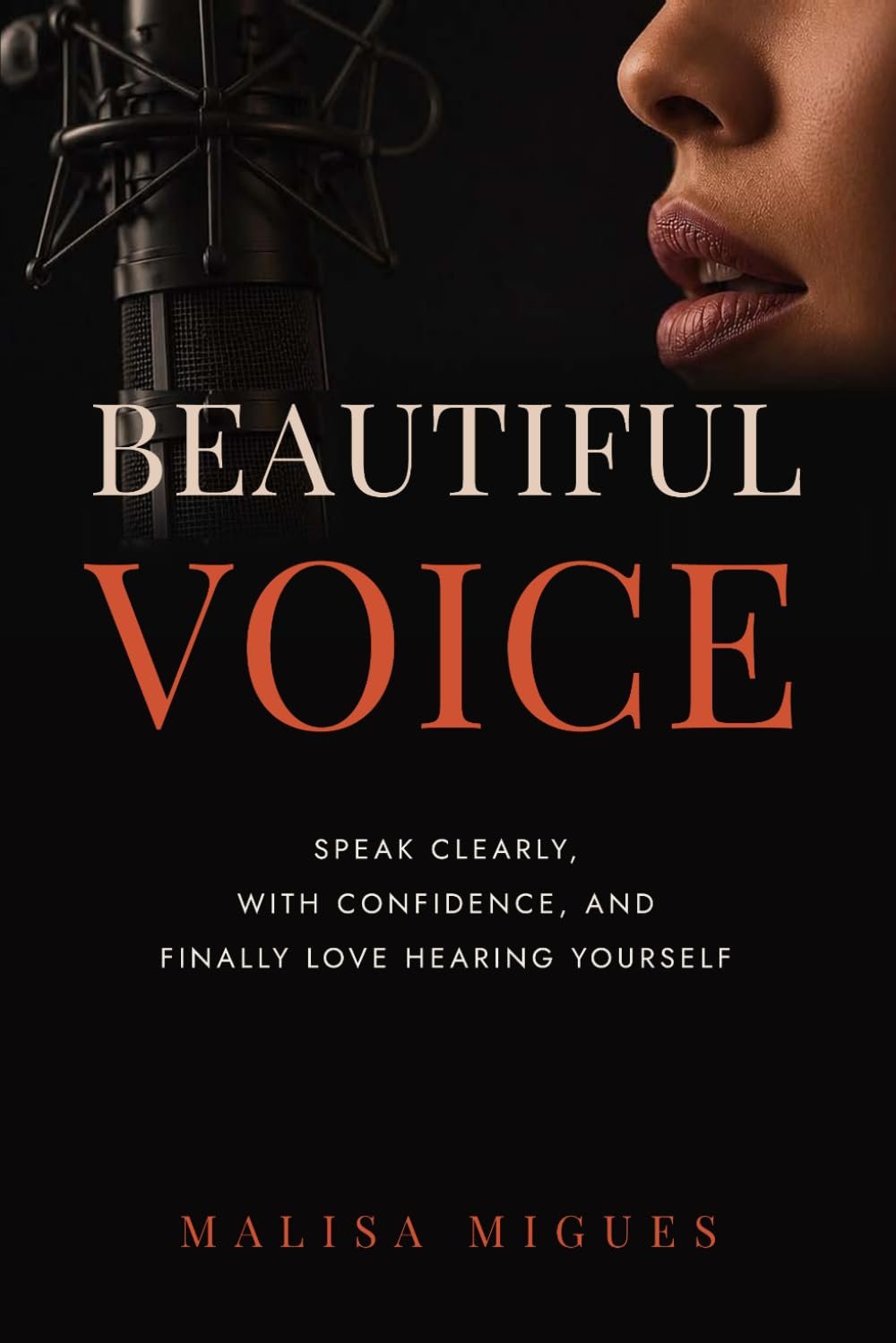
If you want to go deeper into the power of your voice and your expression, I invite you to explore the Beautiful Voice series, where I explore how to speak with clarity, confidence, and authenticity. Find it on Amazon: [ENLACE AMAZON].
And if this article resonated with you, subscribe to Letters from Malisa, my newsletter, where I share reflections on voice, communication, and the art of expressing yourself with confidence. Words have power. Your voice has even more.
Malisa Migues
Author · Voice Artist · Communication Professional
Written by
Malisa Migues
Author · Voice Artist · Communication Professional
Explore more from Malisa Migues
English
Speak clearly, with confidence, and finally love hearing yourself.
Continue the journey — from the voice that persuades to the words that connect. A book to deepen everything you read here.
Keep Reading
Communication
An engaging voice is not louder — it is more alive. Small changes in melody, pace, and warmth can make people want to keep listening to everything you say.
Read MoreVoice
Your voice can close more sales than any argument. Learn to use tone, pace, pauses, and volume to persuade with confidence on the phone, on video calls, or in person.
Read More